
[:en]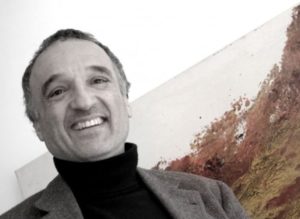 On the 21st of October 2020, after a short, tragic illness, Fabio Ranchetti (1948-2020) passed away. He was an economist, a historian of economic thought, a teacher devoted to his students, a learned man, an erudite scholar, an open minded person, who enriched our discipline, encompassing in his wide culture political economy, philosophy, linguistics, literature.
With a strong philosophic background due to his studies in philosophy in Milan, then at the Trinity College in Cambridge, a crucial period in his life, Fabio Ranchetti conceived economics as fully belonging to moral an political philosophy, and deeply linked to mathematics, logics and linguistics. His scientific work was inspired by this broad, open minded vision of the economic discourse, and it was nourished by the variety of sources in humanistic culture of which he was an expert and a lover. In his personal library, an heritage from his family that he maintained and enriched as a passionate bibliophile, books were disposed not simply by author or subject, but according to the links which he had discovered among them in his interdisciplinary studies.
In his scientific work Fabio Ranchetti wrote on Quesnay, Wicksteed, Edgeworth (an author of whom he had deep knowledge), on Sraffa, with whom he had maintained constant dialogue in Cambridge, on Keynes, whose writings he had studied extensively, with special attention to their philosophical sides and to monetary theory. In his research he explored the relationship between economics and philosophy in Wittgenstein, a philosopher he had meditated for years. He devoted a brilliant, well documented study to the Lettres Persanes by Montesquieu, discussing the complex relationship between fantastic storytelling and the analysis of social reality. He was exploring the relationship between economic themes and literary narration in Thomas Mann’s works.
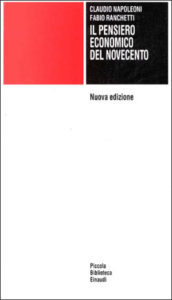 He had the rare gift of being able to offer effective didactical presentations without recurring to schematic popularization, with the aim to propose instruments for improving critical thought. Even today, his book with Claudio Napoleoni Il pensiero economico del Novecento is an important contribution linking history of thought and theoretical reasoning on the major turns in economic theory in the last century. In 2011, at the Festival dell’economia in Trento he discussed in clear language the complex problem of freedom/liberty starting from a linguistic perspective (as inspired by his studies on Wittgenstein), a presentation with an ample cultural background, but always precise in economic language. He went on teaching after retirement, because he simply loved teaching and had a high conception of his task. To invite his students to engage with exploring the problems of the contemporary world, he devoted lot of time to carefully update his knowledge on the burning questions of the day. He cared for his students, and he felt the duty to help them develop their intelligence. To deprive them of the help of lessons and the support of their teacher was one of his primary worries during his illness.
His intelligence, his learning, his kindness, his brilliant conversation, his humor, his generosity leave a regret and a void in the heart of friends and colleagues, who knew him, and who today remember him with love in deep sorrow.
Bruna Ingrao
[:it]Il 21 ottobre 2020, dopo una breve, tragica malattia, è mancato Fabio Ranchetti (1948-2020), economista e storico del pensiero economico, docente dedito e appassionato, studioso erudito e uomo di cultura, voce libera e profonda che ha arricchito la storia del pensiero economico con sguardo critico che spaziava dall’economia alla filosofia, dalla linguistica alla letteratura.
Di solida formazione filosofica per gli studi alla Statale di Milano, poi al Trinity College a Cambridge, esperienza cui rimase profondamente legato, Fabio Ranchetti concepiva l’economia come parte della filosofia morale e politica, pure profondamente legata alla matematica, alla logica e alla linguistica. Il suo lavoro scientifico è stato ispirato a questa visione molteplice e aperta del discorso economico, permeata dal continuo rinvio alle altre fonti della cultura che lo appassionavano e di cui si nutriva. Nella sua biblioteca personale, eredità familiare preziosa, conservata e arricchita dalla sua passione di bibliofilo, i libri erano disposti non secondo ripartizioni rigide per autore o soggetto, ma per i richiami profondi che li legavano nei suoi studi.
I contributi scientifici di Fabio Ranchetti spaziano da Quesnay, a Wicksteed, a Edgeworth (di cui era profondo conoscitore), a Sraffa, con il quale aveva sempre dialogato a Cambrige, a Keynes, autore meditato a fondo, con particolare attenzione agli aspetti filosofici e alla teoria monetaria. Nei suoi studi si interrogava sui rapporti tra economia e filosofia in Wittgenstein, filosofo di cui era attento lettore. Aveva dedicato uno studio documentato e creativo alle Lettres Persanes di Montesquieu, affrontando il delicato equilibrio tra narrazione fantastica e analisi della realtà. Rifletteva sui rapporti tra l’economia e la letteratura in Thomas Mann. Aveva il dono raro dell’esposizione didattica ricca, senza volgarizzazioni, strumento per la formazione dell’intelligenza critica. Il suo libro con Claudio Napoleoni Il pensiero economico del Novecento resta un contributo vitale ancora oggi, a cavallo tra riflessione storica e ragionamento teorico, per delineare alcune grandi tappe della teoria economica nel secolo scorso. Nel 2011, al Festival dell’economia a Trento presentava in modo limpido il complesso tema della libertà partendo dalla prospettiva linguistica, sulle orme di Wittgenstein, con ricchezza di riferimenti culturali, senza perdere mai di vista la precisione dei termini economici. Aveva continuato a far lezione dopo la pensione e si dedicava all’insegnamento con passione non comune. Per stimolare i suoi studenti a guardare il mondo, per le lezioni si preparava scrupolosamente sui temi di attualità. Coltivava i suoi studenti e lasciarli senza lezioni dedicate è stata la sua prima preoccupazione nei giorni della malattia.
La sua intelligenza, la sua cultura, la sua gentilezza, la sua conversazione brillante, il suo umorismo, la sua generosità lasciano un profondo rimpianto e un vuoto negli amici e colleghi, che lo hanno conosciuto e lo ricordano con profondo affetto nel dolore.
Bruna Ingrao
[:]
 Mario Cedrini